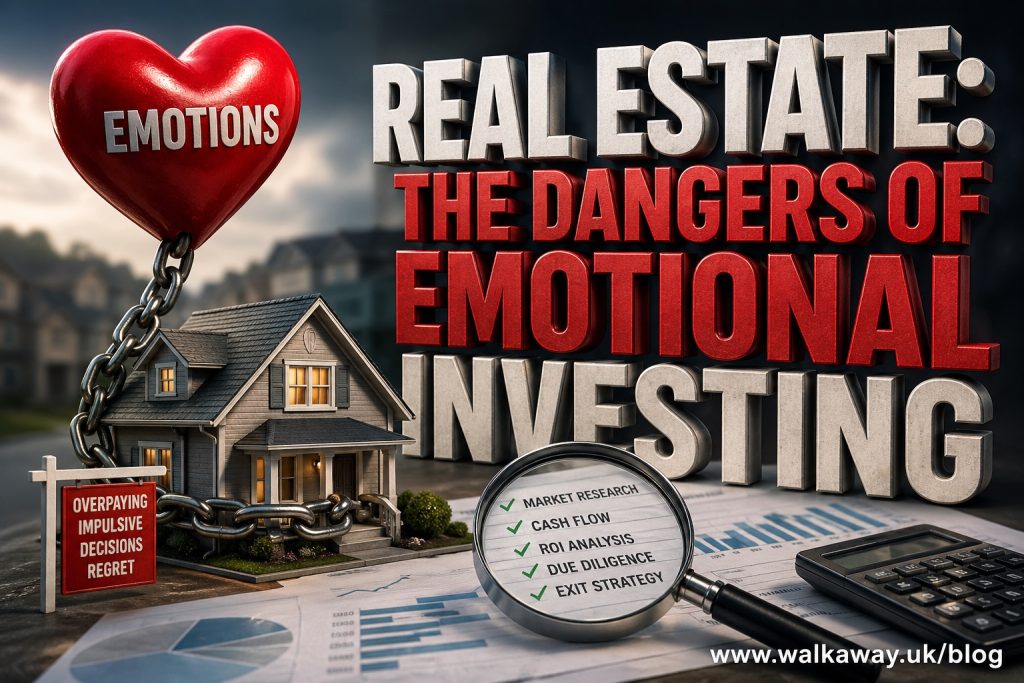
Real estate has long been regarded as a stable and rewarding investment class. From generating passive income to building long-term wealth, the appeal is undeniable. However, one of the most overlooked threats to success in real estate investing is not market volatility or economic downturns—it is emotion.
Emotion-driven investing can quietly erode returns, distort judgment, and lead to costly mistakes. Understanding how emotions influence decision-making is essential for any investor seeking sustainable success.
The Nature of Emotional Investing
Emotional investing occurs when decisions are guided more by feelings than by data, strategy, or objective analysis. In real estate, this often manifests as purchasing a property because it “feels right,” overvaluing aesthetics, or rushing into deals due to fear of missing out.
Unlike stocks, real estate is tangible. Investors can walk through properties, imagine future possibilities, and form personal attachments. While this tangibility is a strength, it also makes real estate particularly susceptible to emotional bias.
Common Emotional Pitfalls in Real Estate
1. Overpaying for a Property
Falling in love with a property can lead investors to ignore market value and overbid. Emotional attachment can justify inflated prices, reducing potential returns from the outset.
2. Fear of Missing Out (FOMO)
In competitive markets, urgency can push investors into rushed decisions. The fear that “this is the last opportunity” often leads to inadequate due diligence and poor investment choices.
3. Holding onto Underperforming Assets
Investors may cling to properties that consistently underperform, hoping conditions will improve. Emotional attachment or reluctance to admit a mistake can delay necessary exits, increasing losses.
4. Overconfidence After Success
A profitable deal can create a false sense of expertise, leading to riskier decisions without proper analysis. Overconfidence often replaces disciplined strategy.
5. Personal Bias Over Market Data
Choosing locations or property types based on personal preference rather than market demand can limit profitability. What appeals to an investor may not appeal to tenants or buyers.
The Financial Consequences
Emotion-driven decisions often result in:
- Lower return on investment (ROI)
- Increased holding costs
- Poor tenant demand
- Reduced liquidity
- Missed opportunities for better-performing assets
Over time, these missteps compound, significantly impacting portfolio performance.
Strategies to Avoid Emotional Investing
1. Establish Clear Investment Criteria
Define your goals, target returns, risk tolerance, and property criteria before entering the market. A structured framework reduces impulsive decisions.
2. Rely on Data and Analysis
Use market research, comparable sales (comps), rental yields, and cash flow projections to guide decisions. Numbers should always outweigh feelings.
3. Implement Due Diligence Processes
Create a checklist for evaluating properties, including location analysis, legal checks, and financial modeling. Consistency is key.
4. Set Exit Strategies in Advance
Determine when and why you will sell a property before you buy it. This prevents emotional attachment from interfering with rational decisions later.
5. Seek Professional Advice
Engage real estate advisors, financial analysts, or property managers who can provide objective insights and challenge emotional assumptions.
Real estate investing is as much a psychological discipline as it is a financial one. While intuition and vision have their place, they must be balanced with data-driven decision-making and strategic planning.
Successful investors recognize that emotions are inevitable—but acting on them is optional. By maintaining discipline, leveraging analysis, and adhering to a well-defined strategy, investors can avoid the dangers of emotional investing and build a resilient, profitable real estate portfolio.
Perhaps most importantly, every investor must develop the discipline to walk away—because sometimes the best deal you make is the one you choose not to pursue.

Join me, Phil Bolitho, on a gripping journey through my true life story in “Walkaway.” This book delves into the challenges I faced as a working-class Cornish lad with dreams of security and stability for my family. It reveals the harsh realities of confronting jealousy and corruption, offering lessons on resilience and the importance of standing your ground. Discover valuable insights on investment and personal growth that can help you navigate your own challenges. Don’t miss out—order your copy today at www.walkaway.uk and learn from my experiences.