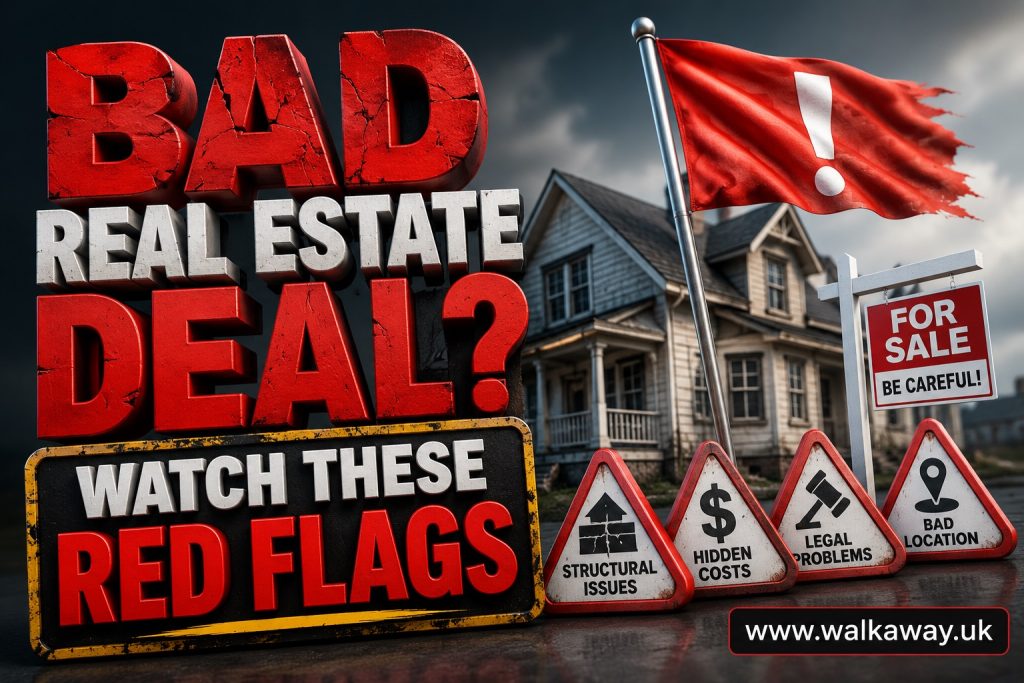
Real estate investing can create financial freedom, long-term wealth, and stability — but only when the right decisions are made. One bad property deal can quickly turn into years of stress, hidden costs, and financial loss. That’s why smart investors focus just as much on avoiding bad deals as they do on finding good ones.
At Walkaway, the focus goes beyond simply buying property. It’s about understanding value, protecting your future, and making decisions that align with long-term financial independence. Whether you are a first-time investor or building a larger portfolio, learning how to identify a bad deal is one of the most important skills you can develop.
1. The Property Is Priced Far Below Market Value
Everyone wants a bargain, but in real estate, extremely low prices can signal deeper problems. A property that looks “too cheap” may come with:
- Structural damage
- Legal complications
- Unpaid taxes or debts
- Unsafe neighborhoods
- Costly repair requirements
Compare similar properties in the same location before making any commitment.
2. Structural Problems Are Being Covered Up
Fresh paint and stylish staging can distract buyers from serious defects underneath. Cracks in the walls, roof leaks, water damage, mold, poor plumbing, or electrical issues can turn a “great deal” into a financial disaster.
Professional inspections are essential before purchasing any property.
3. The Area Shows Signs of Decline
Even a beautiful home can become a poor investment if the surrounding neighborhood is losing value. Watch for:
- Rising crime
- Abandoned businesses
- Weak infrastructure
- Poor transportation access
- Declining rental demand
Location continues to be one of the biggest drivers of real estate success.
4. Hidden Costs Keep Appearing
Some properties look affordable until the additional expenses begin adding up. Smart investors calculate:
- Maintenance costs
- Property taxes
- Insurance
- Renovation expenses
- Legal fees
- Service or management charges
A good investment should remain financially strong even after all costs are considered.
5. You Are Being Pressured to Buy Quickly
Pressure tactics are a major warning sign in real estate. If someone insists you must “buy today” without proper review, take a step back.
Common pressure tactics include:
- “Other buyers are waiting.”
- “This price expires tonight.”
- Refusing inspections
- Avoiding documentation questions
Good investments survive careful analysis.
6. Documentation Is Incomplete or Unclear
One of the fastest ways to lose money in real estate is through poor legal documentation. Buyers should always verify:
- Ownership records
- Land titles
- Building permits
- Outstanding debts
- Legal disputes tied to the property
Working with a trusted lawyer or real estate professional can prevent major problems later.
7. Unrealistic Profit Promises
Be cautious of anyone promising guaranteed profits or “risk-free” returns. Real estate can build wealth, but every investment carries risk.
Watch out for phrases like:
- “Guaranteed income”
- “Instant wealth”
- “Zero-risk investment”
- “Double your money quickly”
Experienced investors rely on research and realistic expectations — not hype.
8. The Property Has Been Unsold for a Long Time
If a property has been sitting on the market while similar listings sell quickly, there is usually a reason. Possible problems include:
- Failed inspections
- Legal issues
- Overpricing
- Financing complications
- Poor location trends
Always ask why previous buyers walked away.
The Walkaway Mindset
One of the most valuable skills in both life and real estate investing is knowing when to walk away. Not every opportunity deserves your money, your time, or your future. Sometimes the smartest financial decision is avoiding the wrong deal entirely.
That philosophy is central to Walkaway — a platform and book built around independence, critical thinking, personal growth, and breaking away from systems or decisions that no longer serve your future. Walkaway explores themes of freedom, reinvention, resilience, and the courage to choose a different path when necessary.
In real estate, that mindset matters more than ever. Successful investors are not simply those who buy the most properties, but those who recognize danger early, protect their finances wisely, and have the discipline to walk away from bad deals before they become costly mistakes.