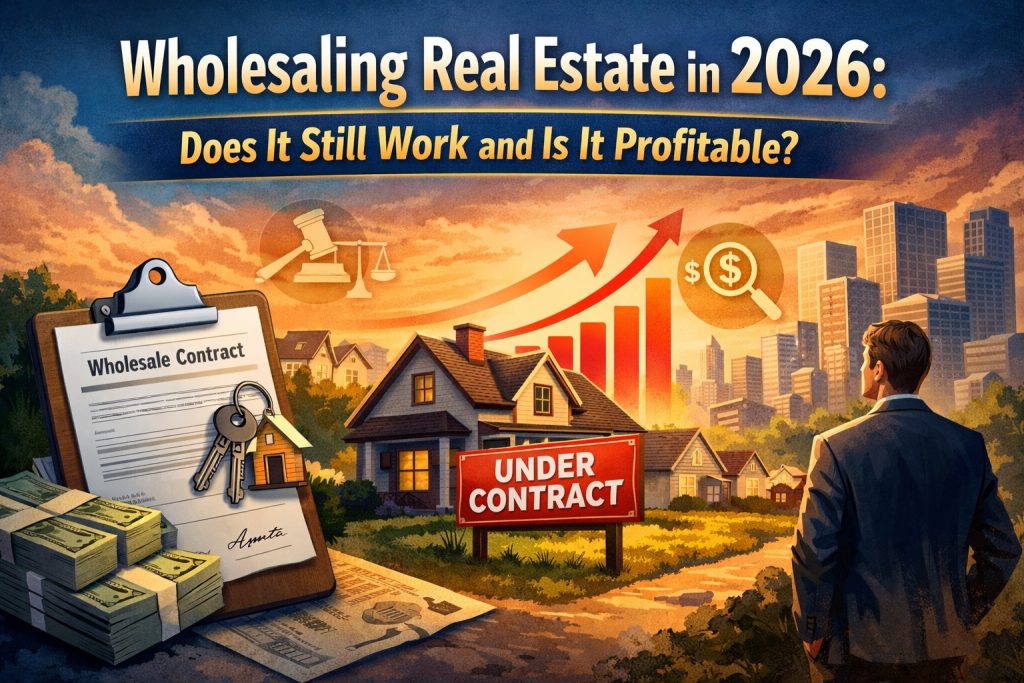
Wholesaling real estate has long been marketed as one of the quickest ways to enter property investing without large amounts of capital. The premise is simple: find a motivated seller, put a property under contract at a discounted price, and assign that contract to an end buyer for a fee. But in 2026—amid higher interest rates, shifting buyer demand, tighter regulations, and increased competition—many investors are asking an important question: does wholesaling real estate still work, and is it still profitable?
How Wholesaling Real Estate Works (Quick Refresher)
At its core, wholesaling involves three parties: the seller, the wholesaler, and the end buyer (usually a fix-and-flip investor or landlord). The wholesaler secures the property under contract and then assigns the contract to the buyer for a profit. Unlike traditional real estate investing, wholesalers typically never take ownership of the property, making it appealing to beginners or investors with limited funds.
What’s Changed for Wholesaling in 2026?
The real estate market in 2026 looks very different from the boom years of the early 2020s. Several key shifts are reshaping wholesaling:
- Higher interest rates: Financing costs remain elevated, shrinking buyer pools and forcing investors to be more selective.
- More educated sellers: Homeowners have better access to online valuations and market data, making deep discounts harder to negotiate.
- Increased competition: Social media and online courses have flooded the market with new wholesalers.
- Stricter regulations: Some states now require disclosures, licensing, or stricter contract language for wholesalers.
These changes haven’t killed wholesaling—but they’ve made sloppy, low-effort approaches far less effective.
Does Wholesaling Still Work in 2026?
Yes, wholesaling still works in 2026—but only for investors who adapt. The days of blasting generic texts, locking up contracts sight unseen, and assigning deals instantly are largely over. Successful wholesalers today focus on:
- Building real relationships with motivated sellers
- Understanding local market numbers in detail
- Providing real value, not just chasing quick fees
- Working with serious, well-funded buyers
In slower or uncertain markets, motivated sellers still exist—job relocations, inherited properties, financial distress, or landlords exiting the market continue to create opportunity.
Is Wholesaling Real Estate Still Profitable?
Wholesaling can still be profitable in 2026, but profit margins are tighter. Average assignment fees may be smaller, and deals often take longer to close. However, skilled wholesalers can still earn five-figure monthly income by focusing on quality over quantity.
Profitability now depends on:
- Accurate deal analysis and conservative numbers
- Strong buyer lists with active cash investors
- Local expertise instead of nationwide mass marketing
- Creative deal structuring, including double closes or novations where legal
Those who treat wholesaling like a real business—not a side hustle—are the ones still making money.
Common Mistakes Wholesalers Make in 2026
Many investors struggle because they rely on outdated tactics. Common mistakes include:
- Overestimating after-repair values (ARV)
- Locking up deals without buyer demand
- Ignoring legal and compliance requirements
- Competing only on price instead of service
Avoiding these pitfalls is critical in a tighter, more regulated market.
Who Should Consider Wholesaling in 2026?
Wholesaling remains a viable strategy for:
- New investors willing to learn sales, negotiation, and market analysis
- Experienced investors using wholesaling to source their own deals
- Entrepreneurs looking for a flexible, deal-driven real estate business
It is less suitable for those expecting quick money with minimal effort.
Is Wholesaling Worth It in 2026?
Wholesaling real estate in 2026 is not dead—but it has evolved. It’s no longer an easy, push-button strategy. Instead, it rewards professionalism, local expertise, ethical practices, and patience. For investors willing to adapt to market realities and treat wholesaling as a legitimate business, it can still be a profitable and powerful entry point into real estate investing.
In short, wholesaling still works in 2026—but only for those willing to work smarter, not just harder. It’s about making smart choices, not chasing desperate deals, and knowing when to walk away.

Join me, Phil Bolitho, on a gripping journey through my true life story in “Walkaway.” This book delves into the challenges I faced as a working-class Cornish lad with dreams of security and stability for my family. It reveals the harsh realities of confronting jealousy and corruption, offering lessons on resilience and the importance of standing your ground. Discover valuable insights on investment and personal growth that can help you navigate your own challenges. Don’t miss out—order your copy today at www.walkaway.uk and learn from my experiences.