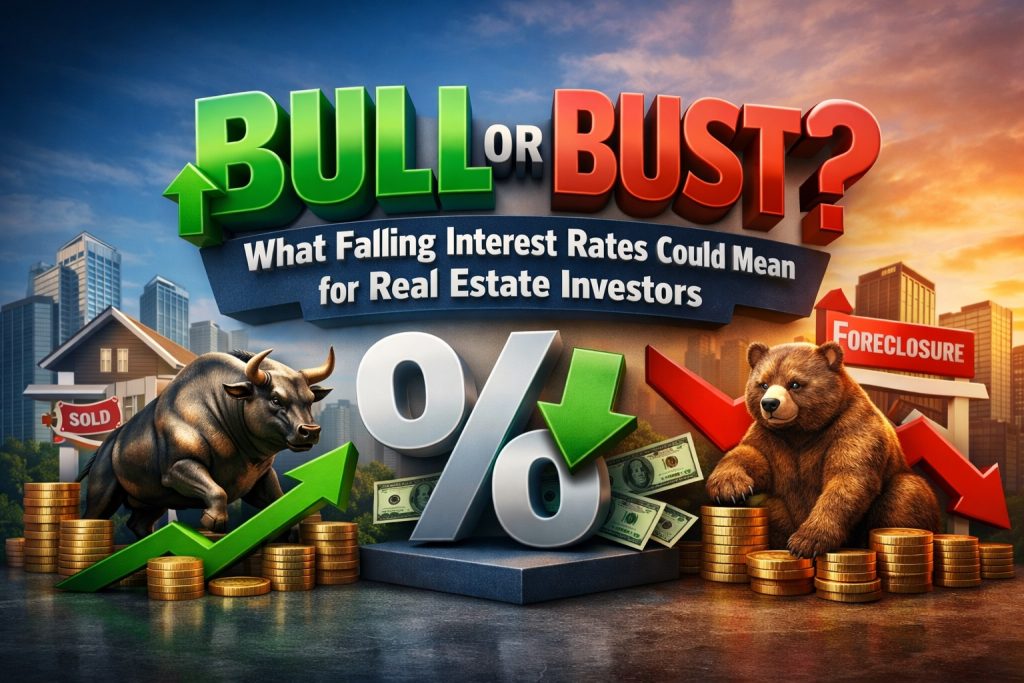
Interest rates play a powerful role in shaping the real estate market. When rates fall, the cost of borrowing declines, mortgages become more affordable, and investor sentiment often improves. But while lower interest rates can ignite a surge in property demand, they can also introduce new risks and market distortions.
For real estate investors, the big question remains: do falling interest rates signal the start of a booming market or could they eventually lead to a bust?
Why Interest Rates Matter in Real Estate
Real estate investing is heavily tied to financing. Most investors rely on mortgages or other forms of borrowing to acquire property, so changes in interest rates can significantly affect profitability.
When interest rates fall:
- Mortgage payments decrease, making properties more affordable to finance.
- More buyers enter the market, increasing demand for homes and investment properties.
- Property values often rise, as competition among buyers intensifies.
- Investors can refinance existing loans, lowering their costs and improving cash flow.
In short, lower rates typically act as a catalyst for increased real estate activity.
The Bull Case: Why Lower Rates Can Boost Real Estate
For many investors, falling interest rates are seen as a green light to buy property. Here’s why.
Increased Buying Power
Lower mortgage rates allow investors to borrow more while keeping monthly payments manageable. This means they can target larger or higher-value properties than they could when borrowing costs were higher.
Rising Property Demand
When borrowing becomes cheaper, more people enter the housing market. This increased demand often pushes property prices upward, benefiting investors who already own assets.
Stronger Cash Flow
Lower interest expenses mean higher profit margins on rental properties. Investors may see improved cash flow, especially if they refinance existing loans at lower rates.
Easier Portfolio Expansion
Cheap financing allows experienced investors to scale their portfolios faster. With lower capital costs, purchasing additional properties becomes more financially viable.
These factors explain why periods of falling interest rates have historically been associated with real estate booms.
The Bear Case: Potential Risks for Investors
Despite the optimism surrounding lower interest rates, they don’t guarantee long-term success. In fact, they can sometimes lead to overheated markets and financial risks.
Rising Property Prices
As demand surges, property values can climb rapidly. This may reduce investment yields and make it harder to find undervalued deals.
Increased Competition
Lower rates attract both individual investors and large institutional buyers. This increased competition can push prices beyond what rental income can justify.
Risk of Market Bubbles
In some cases, cheap credit fuels speculative buying. If prices rise too quickly without strong economic fundamentals, markets may eventually correct.
Economic Warning Signs
Interest rates often fall because central banks are trying to stimulate a slowing economy. If the broader economy weakens significantly, job losses and declining incomes could impact housing demand and rental markets.
For this reason, falling interest rates can sometimes be a double-edged sword.
Smart Strategies for Investors in a Falling Rate Environment
Rather than assuming a bull market, successful investors focus on strategy and fundamentals.
Focus on Cash Flow
Even if property prices rise, ensure rental income can comfortably cover expenses and generate profit.
Avoid Over-Leverage
Lower borrowing costs may tempt investors to take on excessive debt. Maintaining conservative financing helps protect against market downturns.
Look Beyond Price Growth
Investors should prioritize location, demand, and long-term value rather than relying solely on appreciation.
Monitor Economic Trends
Interest rates are only one factor affecting real estate. Employment levels, population growth, and housing supply also play crucial roles.
Bull or Bust? The Likely Reality
In reality, falling interest rates rarely create a simple “bull or bust” outcome. Instead, they often trigger both opportunities and risks simultaneously.
In the short term, lower rates typically stimulate real estate activity and support property values. However, if cheap money leads to excessive speculation or inflated prices, markets can eventually correct.
For investors, the key is not trying to predict the exact direction of the market but building resilient investment strategies that perform well under different economic conditions.
Falling interest rates can create powerful opportunities for real estate investors, from cheaper financing to rising demand. But they can also lead to intense competition and potential market overheating.
The smartest investors understand that success in real estate isn’t just about timing interest rate cycles—it’s about discipline, careful analysis, and long-term thinking.
And perhaps the most important rule of all is this: if the numbers don’t work, don’t force the deal. Whether interest rates are rising or falling, a property should stand on its own financially. If an investment no longer makes sense, doesn’t produce reliable cash flow, or carries more risk than reward, the smartest move may simply be to walk away.

Join me, Phil Bolitho, on a gripping journey through my true life story in “Walkaway.” This book delves into the challenges I faced as a working-class Cornish lad with dreams of security and stability for my family. It reveals the harsh realities of confronting jealousy and corruption, offering lessons on resilience and the importance of standing your ground. Discover valuable insights on investment and personal growth that can help you navigate your own challenges. Don’t miss out—order your copy today at www.walkaway.uk and learn from my experiences.