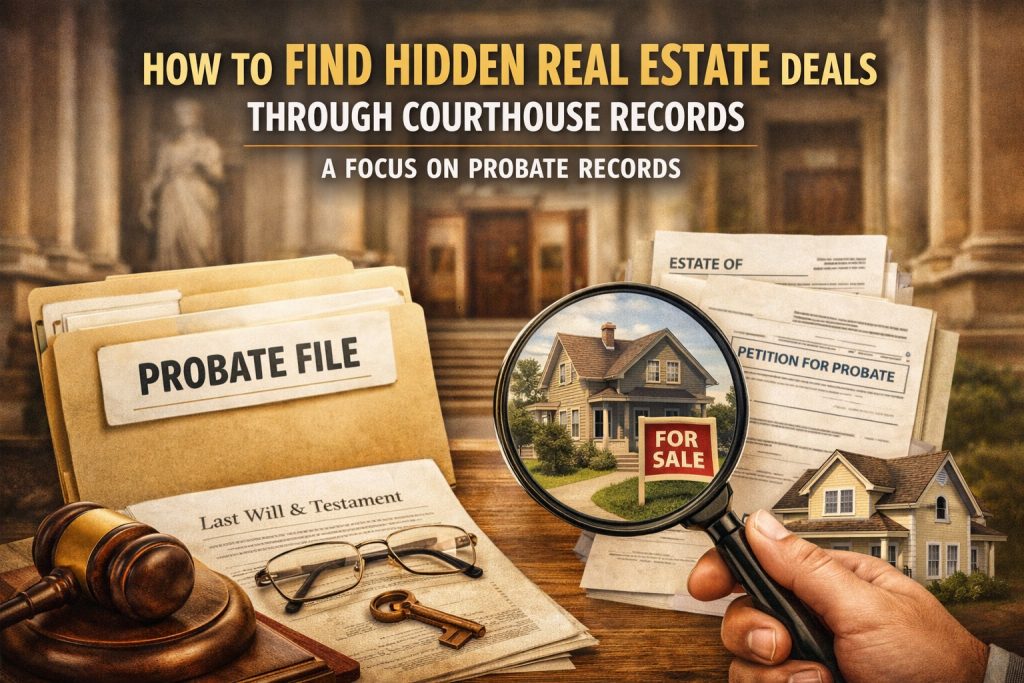
In today’s competitive real estate market, finding undervalued or off-market properties can feel like searching for a needle in a haystack. While most buyers rely on online listings and agents, some of the best opportunities never reach public marketplaces. One often-overlooked source of hidden real estate deals is courthouse records—particularly probate records.
Understanding how to access and use these records can give investors and buyers a significant advantage.
What Are Courthouse Records in Real Estate?
Courthouse records are public documents maintained by local courts and government offices. In real estate, these records may include:
- Probate filings
- Foreclosure notices
- Tax lien records
- Deeds and title transfers
- Divorce and estate settlement filings
Because these records are public, anyone willing to research them can uncover potential property opportunities before they appear on popular listing platforms.
Understanding Probate Records
Probate is the legal process that occurs after a property owner passes away. During probate, the court oversees the distribution of the deceased person’s assets, including real estate.
Properties involved in probate often present opportunities because:
- Heirs may live out of state and want a quick sale
- The property may be outdated or poorly maintained
- Multiple heirs may prefer selling rather than managing the asset
- The property is rarely marketed aggressively
These factors can create motivated sellers and flexible pricing.
Why Probate Properties Can Be Hidden Deals
Probate properties are often not listed immediately, if at all. Many heirs are unfamiliar with the real estate process and may not know how to prepare a property for sale. As a result:
- Fewer buyers are competing
- Negotiations may be more flexible
- Sellers may prioritize speed over maximum profit
For savvy buyers, this creates a window of opportunity.
How to Find Probate Records at the Courthouse
1. Visit the Local Probate Court
Most probate records are held at county courthouses. You can visit in person and request access to probate case files. Some courts require basic information such as the deceased’s name or case number.
2. Use Online Court Databases
Many counties now provide online access to probate filings. Search the county clerk or probate court website and look for terms such as:
- “Estate of”
- “Letters of Administration”
- “Executor of Estate”
These records often list the deceased’s last known address, which may be the property in question.
3. Identify Property Ownership
Once you locate a probate case, cross-reference it with property records at the county assessor’s or recorder’s office. This helps confirm ownership, property value, and tax status.
How to Approach Probate Property Opportunities
Be Respectful and Professional
Probate situations involve loss. When reaching out to heirs or executors:
- Avoid aggressive sales tactics
- Express understanding and professionalism
- Offer solutions, not pressure
Work With the Executor or Attorney
The executor or estate attorney is typically responsible for selling the property. Establishing a cooperative relationship can help move the process smoothly.
Do Your Due Diligence
Probate properties may come with:
- Outstanding taxes or liens
- Deferred maintenance
- Lengthy court approval timelines
Always conduct inspections, title searches, and legal checks before making an offer.
Legal and Ethical Considerations
While probate records are public, buyers must follow local laws regarding solicitation and disclosure. Some jurisdictions restrict how quickly heirs can sell or require court approval for transactions. Consulting a real estate attorney or experienced agent is strongly recommended.
Finding hidden real estate deals doesn’t always require insider connections or expensive software. With patience, research, and respect, courthouse records—especially probate filings—can reveal valuable off-market opportunities.
By learning how to navigate probate records, real estate buyers and investors can gain access to deals that others never see, often with less competition and greater negotiating power.
Remember, not every probate opportunity will turn into a deal—and that’s okay. Successful real estate investors know when to negotiate, when to be patient, and when to walkaway.

Join me, Phil Bolitho, on a gripping journey through my true life story in “Walkaway.” This book delves into the challenges I faced as a working-class Cornish lad with dreams of security and stability for my family. It reveals the harsh realities of confronting jealousy and corruption, offering lessons on resilience and the importance of standing your ground. Discover valuable insights on investment and personal growth that can help you navigate your own challenges. Don’t miss out—order your copy today at www.walkaway.uk and learn from my experiences.